
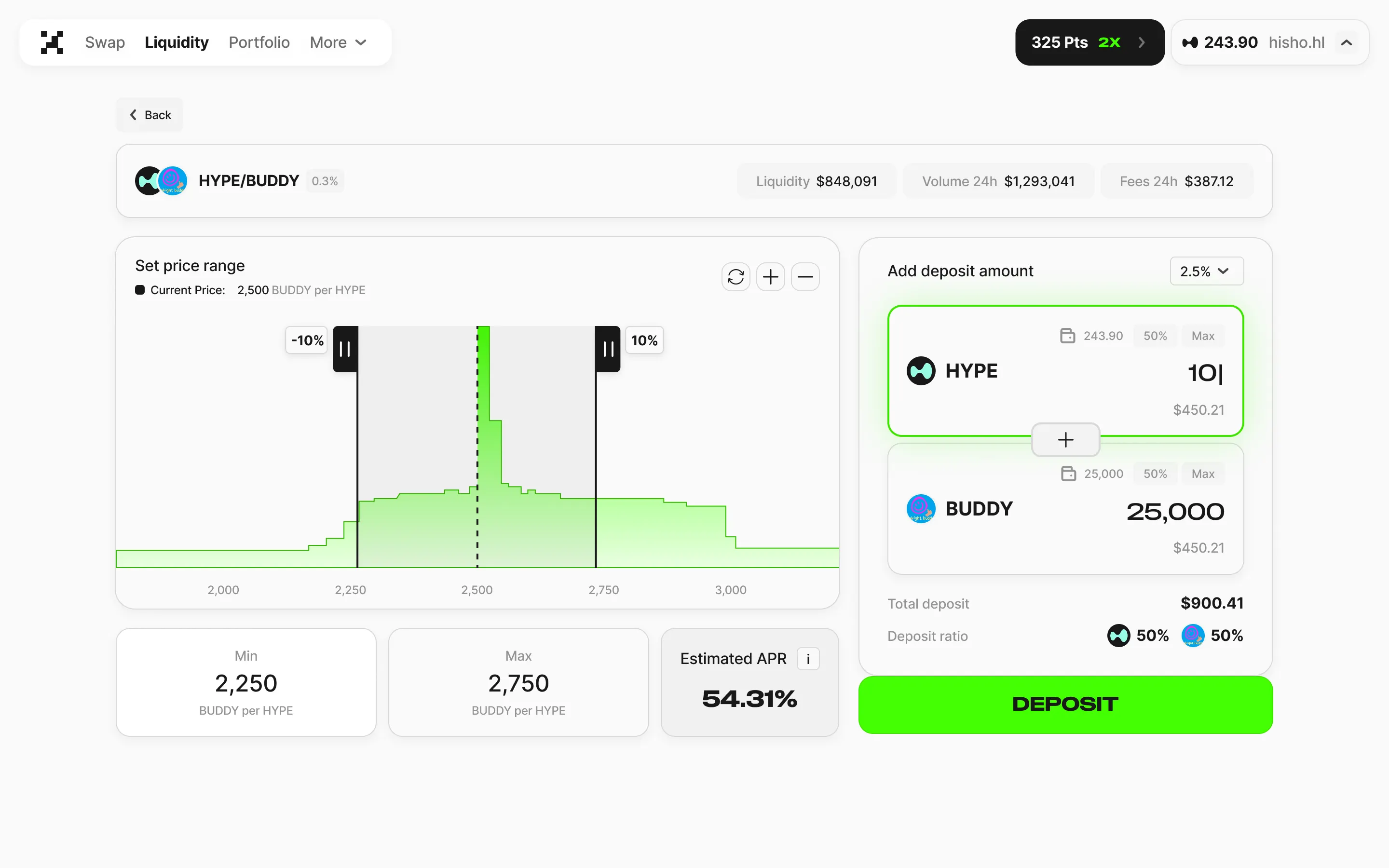
Every new DEX cycle runs on the same fuel: points. You’ve seen the “325 Pts · 2X” badge in the ProjectX app and wondered whether it’s a lottery ticket to a future token. This page gives you the grown-up version — how points likely work, how to earn them without taking dumb risks, and why “guaranteed airdrop” is a phrase only scammers use.
What are ProjectX points?
Points are a loyalty and activity score. As you swap, provide liquidity or otherwise use the protocol, the app credits points — sometimes boosted by a multiplier (the “2X” badge). They’re a way for a young protocol to reward the people who showed up early and provided real usage and liquidity, rather than paying for growth purely with ads.
Crucially, points are not a token. They have no market price, you can’t trade them, and they only become valuable if the team later decides to map them to a reward. That “if” is doing a lot of work — which is exactly why a clear head matters here.
How points are typically earned
Trading volume
Swaps generate points proportional to activity. More real volume, more points — but never trade just to farm; fees and impact add up.
Providing liquidity
Supplying tokens to pools is usually the heaviest-weighted action, because liquidity is what a DEX needs most.
Consistency & time
Programs often reward sustained activity and early participation over one-off bursts.
Referrals & quests
Some campaigns add multipliers for referrals or completing specific tasks. Read the rules so you don’t waste effort.
The honest take on airdrop speculation
Could ProjectX points one day convert into a token airdrop? Possibly. Several Hyperliquid-ecosystem projects have rewarded early users handsomely, and points programs are frequently the on-ramp to a token. But “possible” is not “promised”, and the graveyard of dead points programs is large. Treat any farming as a bonus on top of activity you’d do anyway — not an investment thesis.
Do not spend more on gas, fees and impermanent loss chasing points than a hypothetical airdrop could ever be worth. “Farming” a $50 airdrop with $400 of churn is a loss, not a strategy. Run the numbers coldly.
How to farm points safely
- 1
Use your real wallet, do real things
Genuine swaps and liquidity from a wallet you actually use are the lowest-risk way to accrue points. Wash-trading against yourself just burns fees.
- 2
Size it to your conviction
Only deploy capital you’d be comfortable using on the DEX regardless of any airdrop. Points are the cherry, not the cake.
- 3
Track your costs
Keep a rough tally of fees and impermanent loss. If costs exceed any realistic reward, stop farming and just use the app normally.
- 4
Mind the rules on multiple wallets
Sybil farming (many fake wallets) is exactly what teams design their distributions to punish. It often backfires and disqualifies you.
Airdrop scams: the part that actually costs people money
The single biggest risk around any airdrop isn’t missing it — it’s the fake “claim” pages that follow every hyped distribution. Here’s how the cons work and how to stay clear:
| The scam | How to spot it |
|---|---|
| Fake claim site | You’re told to “claim PRJX now” on a lookalike domain. Connecting and signing drains your wallet. Real claims are announced only on official channels. |
| Seed-phrase “verification” | A page asks for your 12–24 words to “verify eligibility”. This is always theft. No real claim needs your seed phrase. |
| Malicious approval | The “claim” signature actually grants spending access to your tokens. Use a wallet that simulates transactions and read every prompt. |
| Fake support DMs | Someone “from the team” messages first to help you claim. Real teams never DM first or ask for keys. |
Foolproof airdrop rule: a real airdrop never requires your seed phrase and is only ever announced through the project’s official, verified accounts. If you have to rush, it’s a scam engineered to bypass your caution.