
ProjectX (often written PRJX) is a decentralized exchange built on Hyperliquid’s HyperEVM — the smart-contract layer of one of the fastest-growing on-chain trading ecosystems of the cycle. This page is the map: what ProjectX does, who it is for, and the honest trade-offs the official landing page tends to skip.
We are not ProjectX. We don’t take your money, hold your coins, or process trades. Think of this site as the friend who has been in crypto since 2017, has watched a few platforms implode, and reads the fine print so you don’t have to. Everything below is educational, and every hard number is something you should re-check on the official site before you act.
What is ProjectX (PRJX), in one breath?
ProjectX is an automated market maker (AMM) — a decentralized exchange where you trade tokens directly from your own wallet against pooled liquidity, rather than through an order book run by a company. It launched on HyperEVM, the Ethereum-compatible execution environment that sits alongside the Hyperliquid L1. In practice that means low fees, near-instant settlement, and tokens that live in the Hyperliquid universe such as HYPE and a growing list of community assets.
If you have used Uniswap, the mental model is familiar: a clean Swap box for instant trades, concentrated-liquidity pools for people who want to earn fees, a Portfolio view, and a gamified points program that rewards early activity. The difference is the chain underneath and the speed it unlocks.
The four things ProjectX actually does
Swap
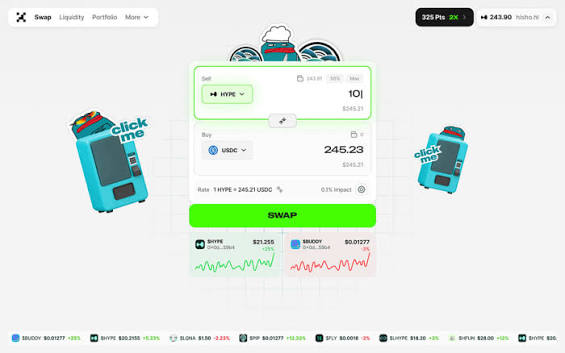
Trade one HyperEVM token for another in a single signed transaction. You pick the pair, the app routes through liquidity pools, and you approve from your own wallet. No account, no order book.
Liquidity
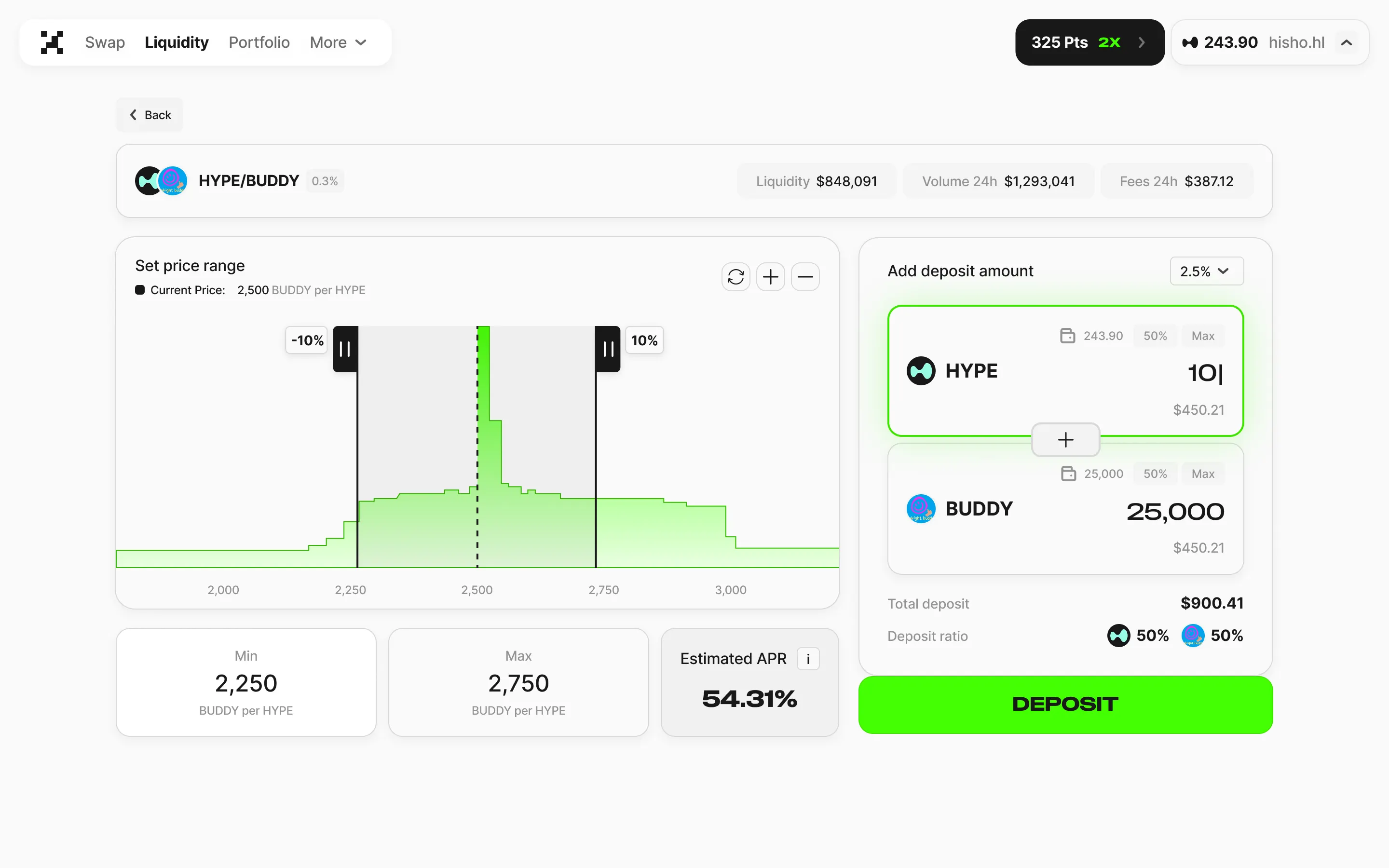
Supply two tokens into a concentrated price range to earn a share of trading fees. Higher capital efficiency than old-style pools — but it demands attention, because ranges can drift out of the money.
Portfolio
A dashboard of your open positions, fees earned and token balances, all read straight from the blockchain via your connected wallet address.
Points
A loyalty layer (the “Pts” and multiplier badges you see in the app) that tracks activity and may feed a future reward or airdrop. Useful, but never a guaranteed payout.
The most important thing: you stay in control of your keys
This is the concept that separates a DEX from an exchange like Binance or Bybit, and it is where most beginners get burned. Here it is on the back of a napkin:
Custodial vs non-custodial — the napkin version
A centralized exchange is like a bank. Binance, Bybit, Coinbase hold your coins for you. If you forget your password, support can reset it. The flip side: they can freeze, lose, or be hacked out of your funds, and you must pass KYC.
ProjectX is non-custodial — it is your personal safe. Your crypto never leaves your wallet until you sign a transaction. There is no “forgot password” button. If you lose your seed phrase, no support team on earth can recover your funds. Freedom and responsibility are the same coin.
ProjectX will never ask for your seed phrase. No legitimate DEX, wallet, or support agent ever needs your 12–24 recovery words. Anyone who does is stealing from you. Write the phrase on paper, store it offline, and never type it into a website.
Honest pros and cons
A guide that only lists upsides is an advert. Here is the balanced view from someone who has used a lot of these venues.
| Strengths | Trade-offs to weigh |
|---|---|
| Fast & cheap — HyperEVM settles quickly with low gas versus Ethereum mainnet. | Newer ecosystem — fewer audits and battle-testing than decade-old chains. Smart-contract risk is real. |
| Self-custody — no KYC, no account freezes, you hold the keys. | No safety net — a wrong address or lost seed phrase means permanent loss. No refunds. |
| Concentrated liquidity — capital-efficient fee earning for LPs. | Impermanent loss — LP returns can lag simply holding; ranges need monitoring. |
| Points program — early activity may be rewarded. | No guarantees — points are not a token, and an airdrop is never promised. |
Is ProjectX safe to use?
Safety on a DEX is mostly about your habits, not a single yes/no answer. The contracts can be solid and you can still lose money by signing a malicious approval on a fake site. Our standing checklist:
- Reach the app only through the official domain prjxn.com — bookmark it. Never click swap links from DMs or random ads.
- Verify token contract addresses on a block explorer before trading a thinly-traded asset.
- Start with a small test transaction the first time you use any new pool.
- Use a hardware wallet for any balance you would be upset to lose.
- Review token approvals regularly and revoke ones you no longer need.
Where to go next
Pick the guide that matches what you’re trying to do:
The Swap app, step by step
How to connect, choose a pair, read price impact and slippage, and sign your first trade without mistakes. Open the swap guide →
Login & wallet
There is no email sign-up. We explain wallet connection, what “registration” really means on a DEX, and how to stay secure. Read the login guide →
Airdrop & points
What the points system is, how activity is tracked, and a clear-eyed take on airdrop speculation. See the airdrop guide →